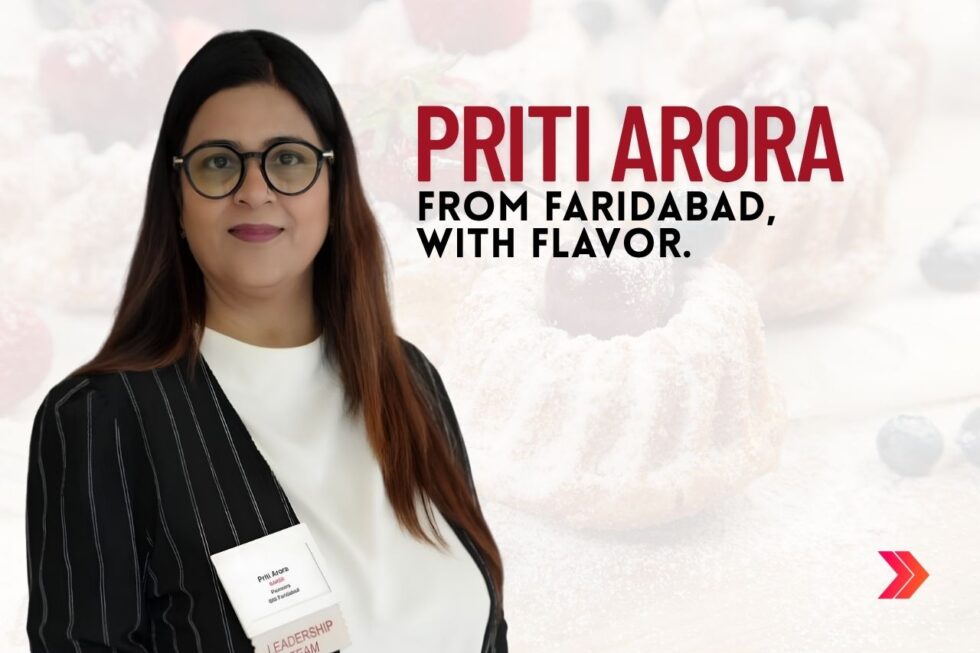
There is a particular kind of ambition that takes root not in a boardroom but in a kitchen, somewhere between the smell of butter browning and the quiet satisfaction of watching someone take a first bite of something you made by hand. For Priti Arora, founder of Varenya, a cloud-based bakery and café based in Faridabad, India, that is exactly where the story begins.
Long before Varenya became a name recognised on online and corporate gifting lists, Priti was simply someone who loved food, not as a business proposition but as a craft. Years spent immersed in the bakery and hospitality world, learning the discipline of consistency, the patience of fermentation and proofing, and the exacting standards that separate an ordinary pastry from an extraordinary one, shaped a philosophy that would eventually become a brand. It is a path familiar to many entrepreneurs in India’s fast-growing food and beverage sector: passion first, business model second, but never the other way around.
“Varenya was created to combine the best of both: a bakery and café style food experience,” Priti explains. “We wanted to make premium baked goods, desserts, and beverages more accessible without compromising on freshness, craftsmanship, or customer experience.”
That balancing act, accessibility without compromise, sits at the heart of what makes Varenya distinct in a market saturated with bakeries, patisseries and café chains. Rather than opening a traditional storefront, Varenya was built as a cloud-based concept from the outset, designed to reach customers across Faridabad and the wider National Capital Region through digital ordering platforms, without the overheads and geographic limits of a physical café network. It is a model that has gained real traction among Indian consumers in recent years, as buying habits shift decisively toward convenience-led, app-first food discovery, but Priti is quick to note that the technology is only ever a delivery mechanism, never a substitute for quality.
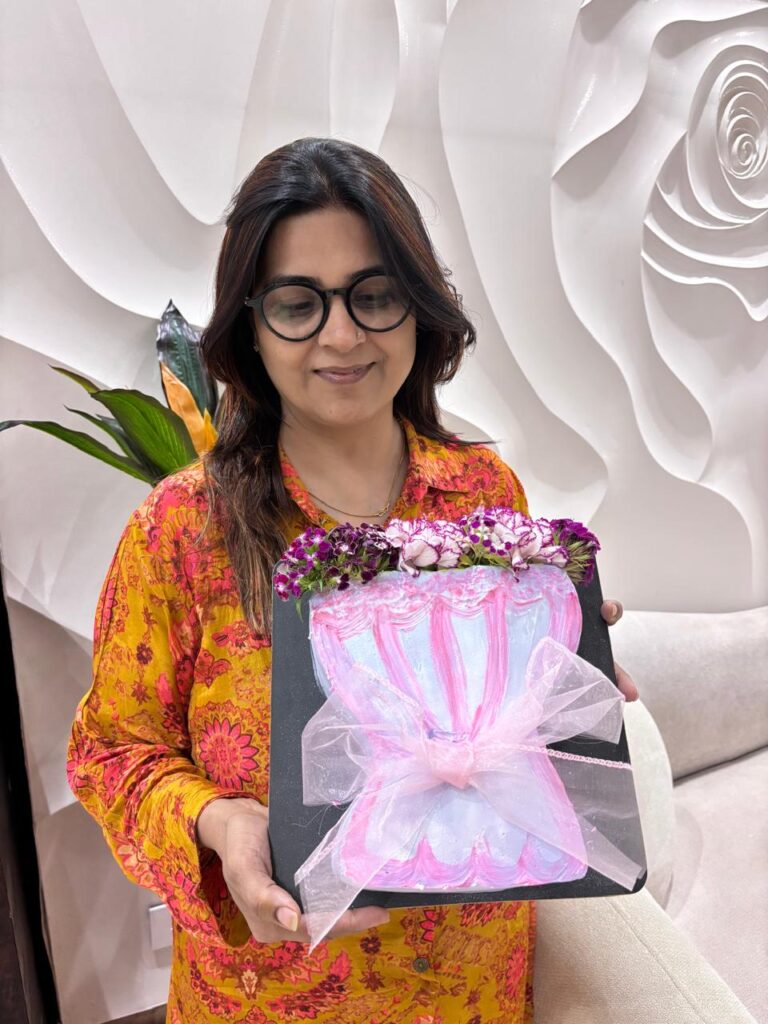
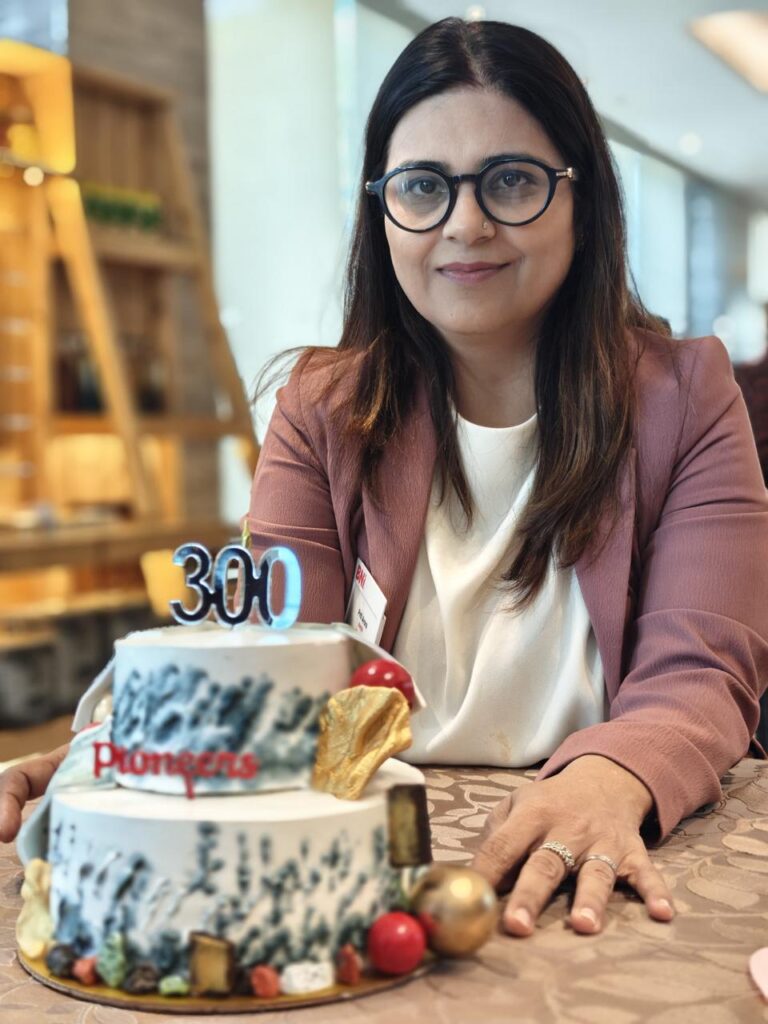
The menu reflects that instinct. Varenya’s offering spans fresh artisanal baked goods and desserts, café-style meals, and hand-crafted chocolates, all produced with the kind of attention to detail more commonly associated with a boutique patisserie than a delivery-first brand. Each category, insiders say, is treated as its own discipline: bread and viennoiserie made with slow fermentation techniques, desserts plated with restaurant-level finishing, and chocolates tempered and hand-decorated in small batches rather than mass-produced.
Behind that consistency lies a deliberate operational choice: sourcing quality ingredients, keeping batch sizes small enough to protect craftsmanship, and refusing to let rapid order volumes dilute the standards Priti set for herself in her earliest days behind an oven. Seasonal and limited-edition offerings are rotated through the menu to keep regular customers engaged, while core items are held to a fixed, non-negotiable recipe standard, a discipline Priti says was the hardest habit to instil across a growing team, but the one she considers most responsible for Varenya’s early word-of-mouth growth.
Perhaps the most distinctive layer of the business, however, is one that goes beyond the individual customer entirely. Varenya has built a growing presence in the corporate and institutional space, supplying cakes, curated meal boxes, and gifting solutions for festivals and special occasions to businesses in and around Faridabad. In a market where corporate gifting has become an increasingly important, and increasingly scrutinised, part of relationship-building between companies, clients and employees, Varenya’s positioning taps into a real gap: premium, consistent, brand-appropriate gifting that doesn’t sacrifice the artisanal quality customers expect from the individual side of the business.
It is not a small ambition. Corporate clients expect reliability at scale: the same standard of cake for an order of five as for an order of five hundred, delivered on time, every time, around a festival calendar in India that can be dense and demanding, from Diwali and Raksha Bandhan to New Year and Republic Day. Meeting that expectation while still hand-finishing chocolates and baking fresh daily is, by Priti’s own admission, one of the harder operational puzzles the business has had to solve, and one that continues to shape how Varenya scales its kitchens and logistics.

India’s corporate gifting culture has long been more than a seasonal courtesy; it is woven into how business relationships are maintained across the year, from onboarding new partners to marking a client’s long-standing loyalty. That culture has, in turn, created space for a new generation of homegrown F&B brands willing to treat gifting not as an afterthought bolted onto a retail menu, but as a dedicated line of business with its own design language, packaging standards and account management. Priti positions the company squarely inside that shift, arguing that a corporate client sending a hamper or cake to a partner is, in effect, lending that partner’s impression of them to whichever brand supplies the product, which is precisely why consistency, presentation and reliability carry as much weight in that segment as flavour itself.
For Priti, though, the toughest part of the journey was never really about ovens or algorithms. It was about proving, first to herself and then to a market that already had no shortage of bakeries and cafés, that there was room for something built differently: a brand rooted in craftsmanship but engineered for how people actually order food today. That conviction was tested repeatedly in Varenya’s early days, through the unglamorous realities every founder in this industry will recognise:
perfecting recipes that hold up through delivery, building supply chains for consistent quality, and earning trust one order at a time in a market where customers have endless alternatives a single tap away.
What has emerged from that process is a business with ambitions well beyond its current footprint. “My goal is to make Varenya synonymous with fresh, high-quality bakery goods, café products and gifting solutions for individuals as well as corporate clients,” Priti says. “I want to build a brand that customers trust, a business that scales efficiently, and a company that creates lasting value for employees, partners, and the communities we serve.”
That last phrase, lasting value for employees, partners, and communities, is a notable one for a young food brand to lead with, and it points to a broader shift underway in India’s homegrown F&B scene. Increasingly, founders in this space are talking not just about product and margins but about the kind of organisation they are building: one that can support careers, sustain partnerships with suppliers and corporate clients over years rather than campaigns, and contribute meaningfully to the communities it operates in. Whether that ambition is realised will depend on execution: on kitchens that can scale without losing craftsmanship, and on a digital operation that can keep pace with demand without becoming impersonal.
For now, Varenya is one of a growing number of India-born brands testing whether the intimacy of artisanal food and the efficiency of a cloud-based, digitally native business model can genuinely coexist, and whether Priti’s personal passion for baking can be scaled into a company built for the long term. If the early trajectory out of Faridabad is any indication, customer appetite, both corporate and individual, for that combination shows no signs of slowing.
As India’s food and beverage sector continues to mature, brands like Varenya offer a useful case study in what disciplined, craftsmanship-led growth can look like when it is paired with the right technology and a founder unwilling to compromise on either half of that equation.
Asked what advice she would give to others hoping to follow a similar path, turning a personal passion for food into a scalable, trusted brand, Priti is characteristically measured. Success in this industry, she suggests, rarely arrives as a single breakthrough moment. It builds gradually, through thousands of small decisions made consistently: the ingredient not substituted to save cost, the order remade because it fell short of standard, the relationship with a corporate client nurtured over several occasions rather than a single sale. For Varenya, and for the woman who built it from that early love of baking in Faridabad, that patient, deliberate approach to growth may prove to be the most enduring ingredient of all.