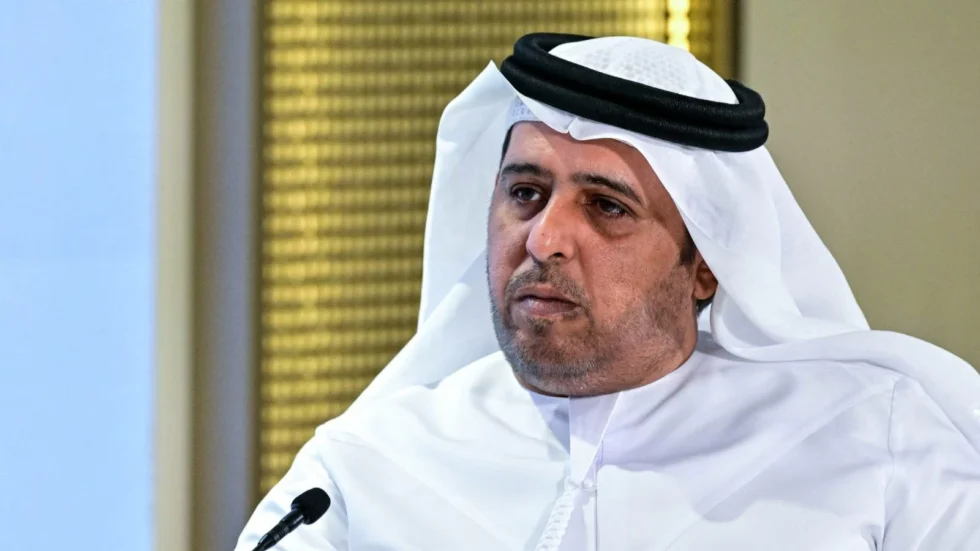
The session “Economic Media in the Age of Platforms”, held as part of Arab media Summit 2026 in Dubai, explored how economic content is evolving amid changing audience behaviour and the rapid shift from traditional journalism and television to digital platforms. The session featured Salem Balyouha, CEO of Media Content Sector at Dubai Media Incorporated, and Albert Shafiq, Chief Operating Officer of Moniify.A legacy spanning more than four decadesAt the start of the session, Balyouha said the vision behind the Dubai Economy platform is built on a long history of economic journalism in the emirate. He noted that the journey began with the launch of Al Bayan as an economic newspaper in the 1980s, followed by Dubai Economy in the 1990s, and later the news centre at Dubai Media. Today, that legacy is evolving into digital economic content designed for new generations.He said the move to digital platforms is a natural extension of that legacy. Audience habits have changed, and people now expect information to be delivered quickly, directly and in an easy-to-understand format. This requires media organisations to rethink both content and presentation to remain relevant to new audiences.Balyouha stressed that the goal is to create digital-first content rather than simply transferring traditional content to digital platforms. He noted that economic media historically targeted investors and specialists. Today, however, it must also reach the general public by simplifying economic concepts and explaining their impact on everyday life.Dubai: An economic story rooted in experienceBalyouha said the Dubai Economy platform aims to present an economic narrative that emerges from Dubai itself.“We want to tell the story from a city that has the economy at its heart,” he said.He explained that the platform seeks to draw on Dubai’s experience, success stories and economic transformations to create digital content that resonates with younger audiences and reaches a broader public.He added that the objective is to transform economic data, information and stories into engaging content that appeals to different audience segments, ensuring that economic issues are not confined to investors and specialists.Artificial Intelligence and the human elementDiscussing technology and artificial intelligence, Balyouha said media organisations are increasingly benefiting from new digital tools across a range of tasks. However, he stressed that these technologies do not eliminate the need for talent or the human element.Referring to technologies such as real-time translation, he noted that artificial intelligence has already taken over certain tasks previously performed by humans. However, many functions, particularly creative ones, remain dependent on human skills and judgement.He said the future relationship between humans and technology should be based on integration rather than replacement. Technology can improve efficiency and accelerate workflows, while humans remain responsible for ideas, creativity and editorial judgement.Generation Z enters journalismAddressing future workforce needs, Balyouha stressed the importance of discovering and developing talent based on industry requirements. He pointed to Dubai Media’s talent-development initiatives, including the “Creativity Makers” programme, which was designed to identify and train emerging talent through long-term planning.He said these initiatives have helped prepare photographers and media professionals for the industry. The organisation is now looking to attract members of Generation Z into journalism, introducing new perspectives and skills aligned with digital platforms and evolving audience expectations.Technological advancementsBalyouha said the Dubai Economy platform is currently in its strategic planning phase and is reviewing the latest technologies and international best practices. He pointed to a visit to Amsterdam to study technological developments and explore ways of creating a distinctive digital media product that reflects changes in the content industry.Digital transformation is a natural evolutionAlbert Shafiq, Chief Operating Officer of Moniify, described the shift to digital platforms as a natural evolution in the media industry.Albert Shafik, Chief Operating Officer, Moniify. (Photo: Patrick Castillo)He noted that newspapers were once the primary source of information before audiences migrated to television. That model later changed with the emergence of digital media and social media platforms.Shafiq said television itself has undergone a transformation and now distributes content through social media channels to reach audiences more effectively. In an era of rapid information flows and constantly changing viewing habits, media organisations must develop new strategies and learn from global experiences.He said insights gained from Amsterdam and emerging technologies are helping shape efforts to develop a distinctive digital product that responds to ongoing industry changes.Speaking to Generation Z in its own languageShafiq discussed the challenge of serving both traditional and younger audiences. He said content aimed at Generation Z must be presented in formats and styles that they understand and engage with, rather than expecting them to consume content through traditional channels.He added that younger generations tend to be more open to financial topics and show strong interest in investment, entrepreneurship and financial independence. As a result, economic content must evolve to reflect these interests and aspirations.More than just newsShafiq said modern economic platforms should go beyond simply reporting news and instead explain how developments affect people’s lives and decisions.He noted that when audiences follow gold prices, oil markets or broader economic developments, they are not only interested in whether prices have risen or fallen. They also want to understand what those changes mean for their investments, finances and daily lives.(Photo: Patrick Castillo)Challenges facing mediaThe session highlighted the challenge posed by the speed of social media. Content creators can issue investment recommendations within seconds, while media organisations remain responsible for verifying information and maintaining professional standards.Speakers said this creates a constant challenge for economic media: balancing the speed of digital platforms with the accuracy, credibility and accountability expected of professional journalism.The session concluded that the future of economic media is not simply about moving journalism and television content to smartphone screens. Rather, it requires rebuilding content to meet the expectations of a new audience, embracing artificial intelligence and technology, developing talent, and presenting economic information in a way that is more accessible, relevant and impactful.