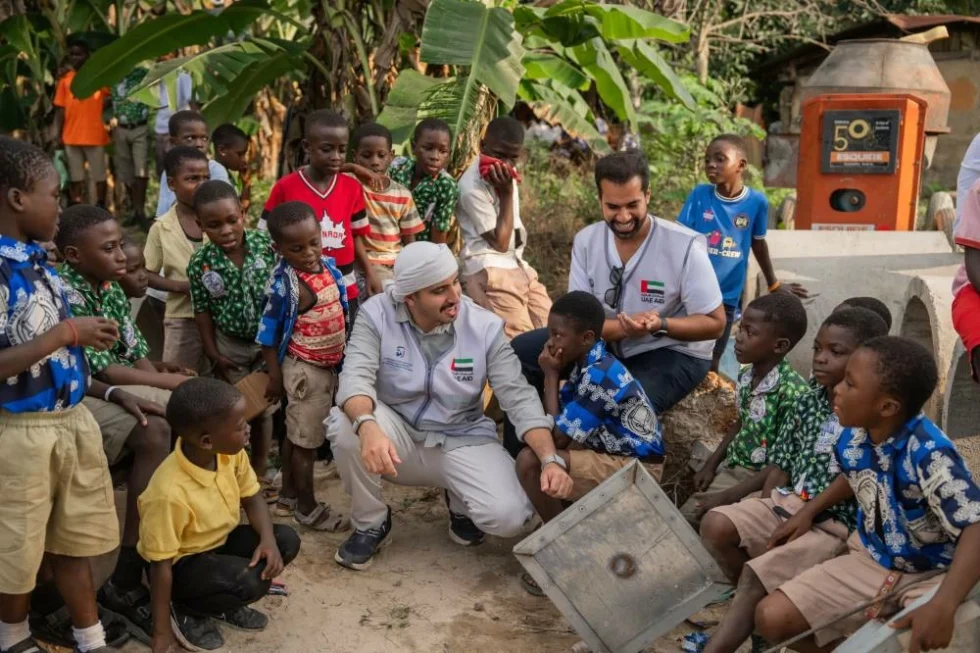
Abu Dhabi: The UAE is spearheading international efforts to combat hunger and malnutrition through humanitarian assistance, development partnerships and agricultural innovation, aiming to save lives, strengthen food system resilience and ensure sustainable supplies.These efforts were reflected in a range of initiatives throughout 2026, including humanitarian campaigns targeting the most vulnerable, international partnerships to expand nutrition programmes, and innovative projects to boost agricultural production and strengthen communities’ capacity to withstand food crises.The ‘Edge of Life’ campaign, launched in February 2026 by His Highness Sheikh Mohammed bin Rashid Al Maktoum, Vice President, Prime Minister and Ruler of Dubai, to save five million children from dying of hunger, raised more than AED2.822 billion, with contributions from 44,208 donors, exceeding its AED1 billion target.The Mohammed bin Rashid Al Maktoum Global Initiatives (MBRGI), the United Nations Children’s Fund (UNICEF) and the Children’s Investment Fund Foundation (CIFF) announced a US$300 million (AED1.0175 billion) partnership to implement the campaign. This includes a joint contribution of US$100 million from MBRGI and CIFF, while UNICEF is mobilising an additional US$200 million through its partners to expand life-saving nutrition programmes.The UAE provided a US$20 million grant to the World Food Programme (WFP) to support people affected by the conflict in Sudan and sent 30 tonnes of food aid to Kenya to assist families affected by drought and climate-related challenges.It also allocated US$8 million to Chad to address the impacts of the El Niño climate phenomenon and the risks of hunger and malnutrition, alongside food assistance delivered to the Gaza Strip by land, sea and air under Operation Chivalrous Knight 3.DP World, in cooperation with the WFP, transported 5,000 metric tonnes of rice to support humanitarian operations in Burundi, the Democratic Republic of the Congo and Rwanda through logistical arrangements that helped cover part of the maritime shipping costs.In April, the UAE was elected to the WFP Executive Board for the 2026-2028 term, expanding its role beyond providing assistance to participating in guiding international efforts to combat hunger, supporting humanitarian operations and supply chains, and helping ensure that food reaches the most vulnerable populations despite global challenges.In September, the Ministry of Climate Change and Environment (MOCCAE) convened a High-Level Ministerial Majlis and Implementation Dialogue: From Water Stress to Implementation – Building Country Pathways for Water-Secure Agriculture at the Permanent Mission of the United Arab Emirates to the United Nations in New York. The event was part of MOCCAE’s participation in the 81st session of the United Nations General Assembly (UNGA 81).Discussions focused on translating national priorities into actionable projects, expanding access to expertise, data and technologies, improving irrigation efficiency, reusing water, protecting groundwater, managing salinity and advancing digital solutions.The roundtable is paving the way for the 2026 UN Water Conference, which Abu Dhabi will host from 8th to 10th December, building on the outcomes of COP28, including the UAE Declaration on Sustainable Agriculture, Resilient Food Systems and Climate Action.Dubai Cares, an organisation under MBRGI, launched the ‘Feed a Child, Build a Kitchen’ campaign to support Kenya’s environmentally friendly school meals programme, with plans to expand the initiative to countries across sub-Saharan Africa.The campaign aims to provide sustainable food and strengthen the ability of children and their families to cope with hunger and malnutrition. More than 90 percent of children in Africa lack a balanced diet, while 60 percent of children in Kenya suffer from malnutrition, affecting school attendance, concentration and academic performance.The UAE and the United States spearheaded the Agriculture Innovation Mission for Climate (AIM for Climate), launched in November 2021 with a US$4 billion investment commitment to global agricultural innovation. In May 2023, investments under the initiative were announced to have increased to more than US$13 billion.At COP28, hosted by the UAE, 134 countries signed a declaration on sustainable agriculture, resilient food systems and climate action. More than US$2.5 billion was also mobilised to support food security in the face of climate change.Domestically, the UAE launched the ”National Programme to Strengthen Supply Chain Resilience in the UAE” to diversify import sources, support local manufacturing and agriculture, and strengthen international partnerships.The country also hosted World Food Week this October, leveraging its strategic position connecting Asia, Africa and Europe and its advanced logistics infrastructure.The UAE’s trade in food, agricultural and related products reached US$41.8 billion in 2025, while Food Tech Valley in Dubai attracted US$50 billion in investments to support the development of a sustainable food ecosystem, including vertical and hydroponic farming technologies and precision fermentation.The UAE is implementing its National Food Security Strategy 2051, which includes 38 short- and long-term initiatives and aims to position the country as a global leader in the Food Security Index by 2051.