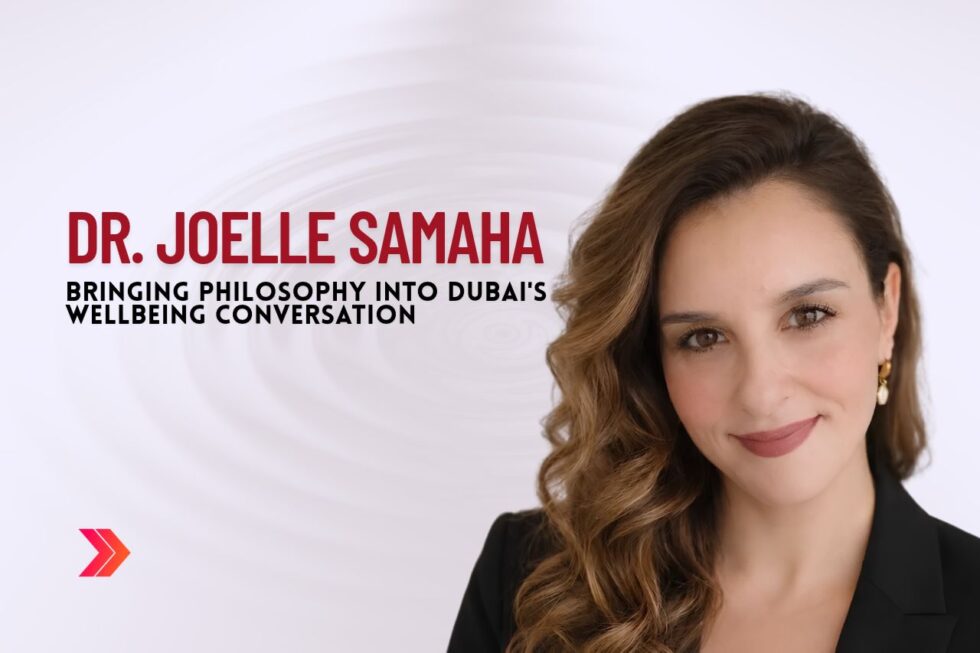
In a city that prizes productivity, Dr. Joelle Samaha, founder and head of wellbeing at PhiloLife Wellbeing Education Center, is asking residents a quieter question: not only what they want to achieve, but who they are becoming while they achieve it.
It is an unusual starting point for a wellbeing practice, and a deliberate one. Dr. Samaha, a philosophical counsellor, ICF Professional Certified Coach, integrative health coach and clinical hypnotherapist, has spent more than two decades in the UAE working on a single puzzle: why people so often know what is good for them and still struggle to live it.
From philosophy to practice
Her route into wellbeing began in a lecture hall, not a clinic. Dr. Samaha holds a Master’s degree in Philosophy, specialising in ethics and metaphysics, and a PhD in the Philosophy of Health and Wellbeing. Her early curiosity centred on health and illness, on where the line falls between normal and pathological, and on how living beings adapt.
Her doctoral research focused on what philosophers call vital normativity: the idea that living things do not simply break down or function, but reorganise and develop new ways of operating in response to life. She explored the theme in her book, The Pathology: A Vital Normativity?, which presents illness as a meaningful biopsychosocial experience rather than only a physical event.
That framing carries into her daily work. “The philosophy you live by becomes the biology you live with” is the sentence she returns to when describing her approach. Beliefs about success, control, rest and self-worth, she argues, quietly shape how people move through their days, and eventually how they feel in their bodies.
Beyond functioning
For a professional audience in Dubai, one of her more pointed distinctions is between functioning and wellbeing. A person can meet every deadline and still be unwell, she contends. Real strength, in her view, includes the flexibility to pause, change direction or accept support.
Her idea of “coherence” follows from this. It does not describe a life free of difficult emotions. It describes awareness and flexibility in how a person responds to life, across thought, feeling, action and relationships. Rather than prescribing behaviour, her method helps people understand the deeper patterns behind their choices.
Dr. Samaha is clear about the limits of her role. She positions her work as complementary to medical care, and encourages people to take an active part in their own wellbeing alongside it.
Two decades of teaching, 15 years of practice
The practice rests on long experience. Dr. Samaha has taught for more than 20 years and has worked in coaching and clinical hypnotherapy for about 15. From 2012 to 2025, she coordinated the STEPS Program at Dubai Homeopathy Health Center, where multidisciplinary assessments informed individualised integrative wellbeing plans focused on prevention, emotional resilience and lasting behavioural change. She works in English, Arabic and French, a practical advantage in one of the world’s most multilingual cities.
The PhiloLife model
Those threads come together at PhiloLife, which is described as a KHDA-approved training institute in Dubai. Its flagship framework is the PhiloLife Vital Coherence Protocol, described as philosophically grounded, evidence informed and somatically embodied. It combines philosophical inquiry, nervous system regulation, somatic practices, hypnotherapy and complementary approaches in an integrative coaching model, aimed at coherence across body, emotions, mind, relationships and daily life.
The centre’s offerings extend well beyond one to one coaching:
PhiloKids and PhiloTeens provide preventive life skills education for young people, covering emotional awareness, self-regulation, body awareness, resilience and reflective thinking. PhiloLife is careful to describe them as life skills education, not tutoring or therapy.
Coherence360 takes the work into organisations, linking employee wellbeing to leadership, workplace culture, psychological safety, burnout prevention and sustainable performance. For employers in a market known for demanding schedules, the pitch is practical: wellbeing as a foundation for performance rather than a perk.
Workshops, expert talks, professional training and philosophy discussions round out the programme, with 2026 sessions planned on resilience, emotional wellbeing, nervous system regulation, leadership and mind-body transformation. A developing community, known as PhiloLifers, offers a space for reflection, connection and learning.
A public conversation
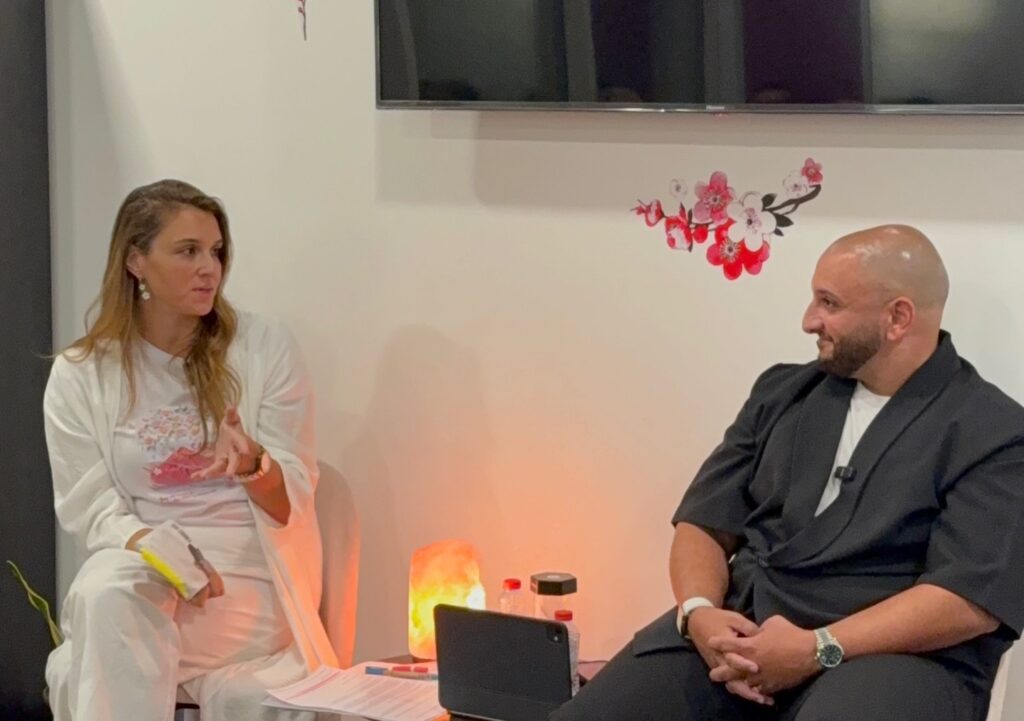
Dr. Samaha also takes the discussion beyond the consulting room. She hosts the podcast LET’S GET REAL 2 HEAL with Dr. Joelle Samaha, which explores healing, identity, resilience, vulnerability and personal growth. The same #LetsGetReal2Heal name anchors an emotional education movement built around reflective circles, healing spaces and open conversations.
For individuals curious about the approach, she offers a free Discovery Session. Individual sessions are currently booked by contacting her by email, as online booking is not yet enabled.
What comes next
The timing of her message is notable. Conversations about burnout, nervous system health and emotional literacy have moved from the margins into boardrooms and school corridors across the UAE, and the demand for approaches that treat the whole person is growing with them.
Dr. Samaha’s answer is not a new technique so much as an older discipline applied to everyday life. If people examine the beliefs they live by, she suggests, the habits and health that follow can change with them. As PhiloLife expands its programmes for young people, professionals and organisations, that question, who are you becoming, is likely to keep finding an audience in Dubai.