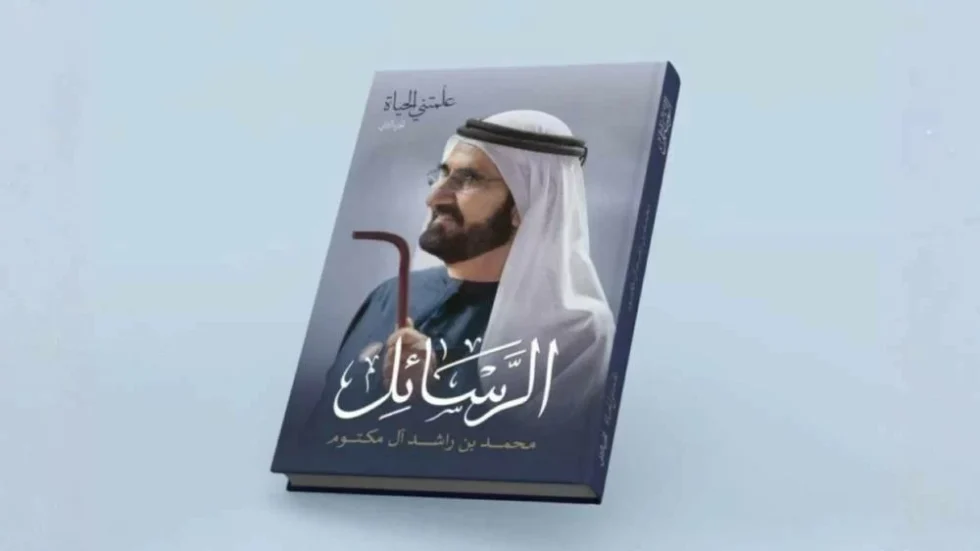
Today, Dubai’s economy is driven by a multitude of interconnected forces. Global trade is supported by a network of ports, airports and logistics services; tourism and hospitality intersect with real estate and urban development; and investment opportunities span financial services, industry and technology. This integration is a source of much of the city’s economic strength and its ability to grow and adapt to shifts in global markets.This diversity is the fruit of a long-term vision and decisions that anticipated the future and opened new doors of opportunity. But when I read the eighth letter in ‘The Letters’ by His Highness Sheikh Mohammed bin Rashid Al Maktoum, Vice President and Prime Minister of the UAE and Ruler of Dubai, addressed to Dubai’s youth, I discovered that behind this vision lies a painful story. It recalls a time when Dubai experienced the harsh consequences of an entire city’s fate being tied to events taking place far beyond it, with the effects reaching people’s homes and tables.His Highness Sheikh Mohammed bin Rashid recalls the years when the pearl trade collapsed, leaving many families without a source of income. People began migrating in search of work and food. Then came the Second World War, disrupting trade and supply routes and intensifying the hardships of daily life. During those years, people ate barley mixed with bread, calling it ‘shambrish’. Some families survived for months on dates and water alone, while others resorted to eating locusts during their season because of extreme poverty. In palm-frond huts, amid intense heat and shortages of water and food, cholera, smallpox and eye infections spread. Entire families were wiped out by simple diseases, their severity compounded by inadequate treatment and malnutrition.The late Sheikh Rashid bin Saeed Al Maktoum made great efforts to pressure the British to lift the complete embargo they had imposed on food imports at a time when war had disrupted trade and supply routes. When food was allowed to enter again, he established a system to distribute available supplies according to specific quotas for each family. These were documented on a small piece of paper called a “card”, giving rise to a name that remains in Dubai’s memory: the “Card Years”.That ordeal left a deep mark on Sheikh Rashid’s thinking. He had witnessed the fragility of an economy dependent on a single resource and understood the importance of diversifying sources of income. He turned to expanding the Creek and developing ports, culminating in Port Rashid and Jebel Ali. He invested in infrastructure and was sometimes forced to borrow to finance his projects, to the point that the British described some of them as “dangerous adventures”.That phrase caught my attention because it reveals a difference in how risk is assessed. Someone looking at limited resources and the scale of expenditure may see the investment itself as the risk. But someone who knows the cost of disrupted livelihoods and has witnessed hunger knocking on people’s doors may see the greater risk in leaving a city exposed to a repeat of the same experience. Seen this way, such projects transcend their economic value. They become a means of protecting people’s lives from remaining hostage to a single circumstance.As the decades passed, life in Dubai changed until the “Card Years” became far removed from the reality of new generations, and perhaps even from their ability to imagine what their parents and grandparents endured. This is why His Highness Sheikh Mohammed bin Rashid recalls the story in a message to Dubai’s young men and women: “I tell you this story, my beloved ones, so that we do not forget, because forgetting is the beginning of arrogance, and arrogance is the beginning of decline.”Forgetting here may mean more than losing the details of the past. When abundance becomes familiar, awareness of what could threaten its continuation may weaken. This is what His Highness Sheikh Mohammed bin Rashid warns against: “The most dangerous moment for a person is not the moment of failure, my children, but the moment when he is possessed by the feeling that he cannot fail.” Repeated success can create a deceptive sense of security, encouraging people to rely on what worked yesterday while overlooking the transformations taking place around them.As His Highness Sheikh Mohammed bin Rashid writes, every generation has its own battle. Yesterday, the fathers confronted hunger and scarce resources by opening the doors of trade and creating new opportunities. Today, Dubai’s leaders face the challenge of maintaining the city’s capacity for renewal and anticipating change through bold decisions, even in times of prosperity. The youth, meanwhile, face the challenge of transforming the opportunities they have inherited into achievements that surpass what has already been accomplished. Abundance gives them a greater ability to take the initiative, but it may also tempt them to postpone it.Between a small piece of paper that determined a family’s share of food and ports that receive ships from around the world lies Dubai’s story, with all its pain and boldness. The card has disappeared from people’s lives, but His Highness Sheikh Mohammed bin Rashid brings its story back to a generation that did not know such hunger, so that another kind of hunger may remain alive within it: “The hunger for great dreams.”—-Naoufer Ramoul is a senior TV presenter and producer at Dubai Media Incorporated, and the host of the award-winning political show Qabel lil Niqash on Dubai TV. She has worked as a presenter at Al Jazeera, Al Arabiya and Alhurra.